It cannot confirm concealed plumbing condition or replace a property-specific assessment.
Read the fixture pattern from the lowest point upward
List every affected fixture by floor and note which one shows water movement when another is used. A toilet that changes when the shower drains may share a bathroom branch. A basement floor drain that rises when upstairs fixtures discharge can point beyond those individual traps. If only the hot side of several faucets is weak, the issue belongs to supply flow rather than drainage.
The first reported symptom matters because a widespread restriction can gradually become visible at new fixtures. Record whether the condition followed laundry, a bath, dishwasher use or rainfall. Do not keep testing with large water volumes once the lowest drain begins to back up; the test itself can increase property damage.
What recurring clearing can reveal—and miss
If previous cable work restored flow, the access point, travelled direction and duration of improvement provide useful evidence. A rapid recurrence may mean deposits were only opened, the wrong route was accessed, an object remains, or a structural condition affects the line. It does not prove any one explanation without additional observation.
A camera may help after the line is open enough to travel and view. Ask for a labelled recording with entry point and distance, and note the limits of visibility. In a house with finished basement ceilings or concealed drains, external locating and access planning may be separate from the camera view.
Start with the pipe route, not the tool
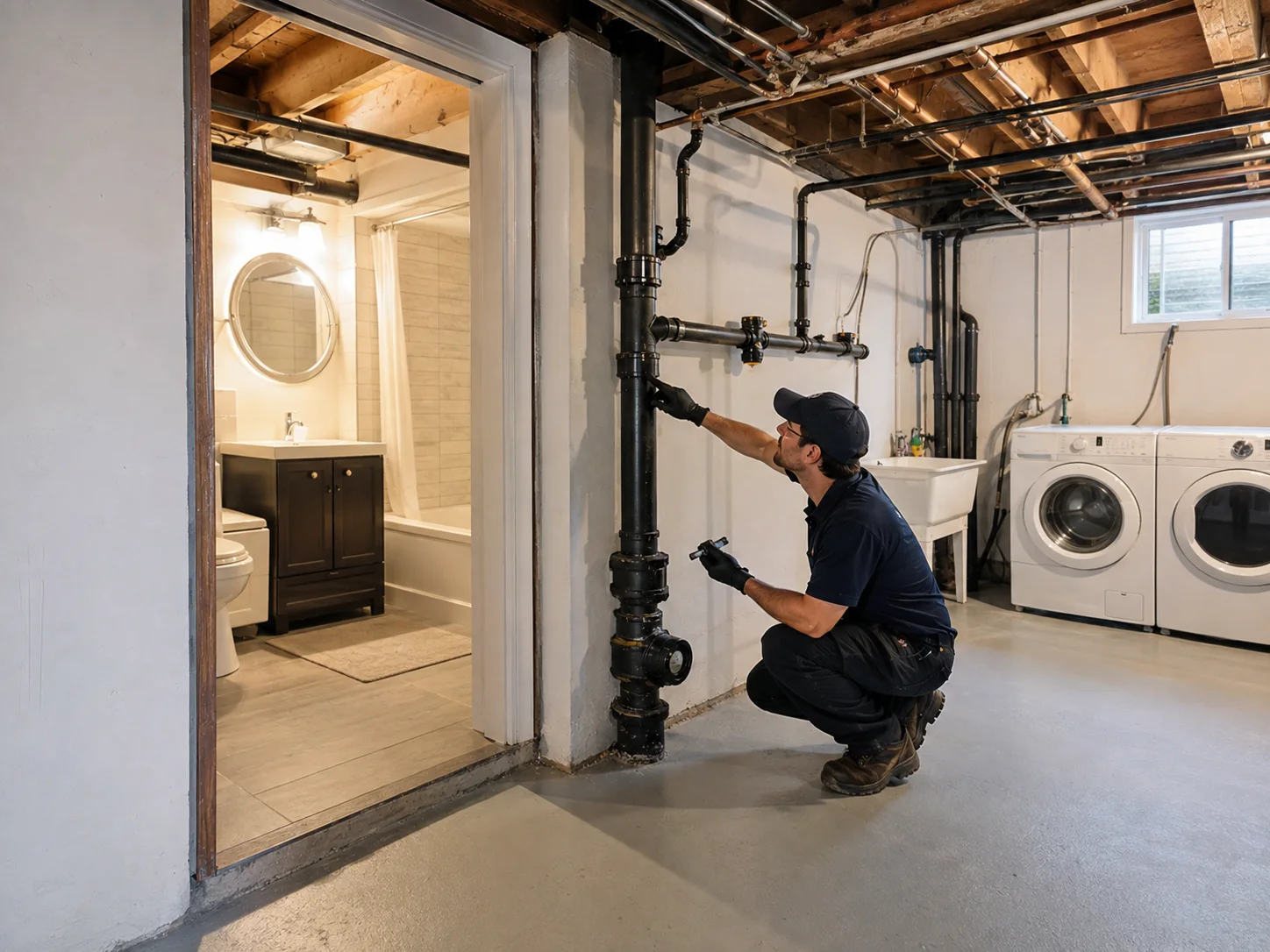
A Toronto plumbing decision becomes clearer when the route is divided into five practical zones: the fixture and trap, the branch serving one room, the vertical stack, the building drain below the lowest fixtures, and the private sewer lateral leading toward the municipal connection. Several slow, gurgling or backing-up fixtures can look similar at the surface even when the responsible zone is different. A tool selected before the route is understood may clear a small opening without explaining a recurring cause, or it may add cost where a simpler fixture-level correction would have been enough.
Begin by recording the first affected fixture, the lowest point where water appeared, every other fixture showing a change, and whether the condition followed heavy use or rainfall. In a Toronto house with one or more storeys and a basement, shared piping and concealed transitions can change what one observation means. A disciplined request gives the plumber a working map while leaving room for on-site findings to revise it.
What the first service conversation should establish
A productive conversation is specific: Is water moving slowly or fully stopped? Is it clean supply water, used fixture water or suspected sewage? Is the condition active now? Can the main shut-off, fixture stop, cleanout or mechanical room be reached safely? Has this exact route been serviced before? Those answers do not complete a diagnosis, but they determine urgency, likely access and which equipment may be relevant.
For multiple clogged drains, ask that the proposed visit describe its starting scope. The description should distinguish observation and testing from cleaning, opening a wall, excavation, component replacement or restoration. This protects both sides from treating an initial hypothesis as a confirmed repair. If access or conditions change, the revised scope can be explained before additional work proceeds.
Evidence a diagnostic method can and cannot provide
The selected diagnostic method can be useful when it answers a defined question. No single method proves every condition. Flow testing may show that drainage has improved without identifying pipe material or a concealed defect. A camera may document visible interior conditions where it can travel, but standing water, bends, deposits and inaccessible branches can limit the view. Listening, moisture readings or pressure tests can narrow a leak location without automatically proving the least disruptive repair route.
Ask for findings in plain language: where the test began, how far it reached, what was directly observed, what remains an inference, and whether the result applies to one fixture or a broader route. A recording or photograph is most useful when its location is labelled. Unlabelled media may look persuasive while being difficult to connect to the property layout.
Scope, access and restoration belong in the same decision
The pipe work is only part of many plumbing jobs. Finished ceilings, cabinetry, tile, concrete, landscaping, tenant access, condo rules and parking can determine how the work is performed. A clear scope identifies the planned access point, who provides access, what protective measures are expected and whether patching, painting, flooring or exterior restoration is included. If those boundaries are unknown, they should be labelled as unknown rather than silently assumed.
In Toronto, older renovations may have changed routes or combined materials over time. The visible fitting does not always represent the concealed system. That is why the decision should allow for a documented change if a wall opening or camera view reveals a different material, connection or condition. The pattern across fixtures and floors should determine whether the first access targets a shared branch, stack, building drain or private sewer lateral.
Safety and damage-control steps while waiting
Stop using a fixture when further use sends water onto a floor, into another unit or back through a lower drain. Keep children and pets away from wastewater. Do not mix chemical cleaners, and tell the plumber about any product already used because residue can create a handling hazard. For an active supply leak, use an accessible shut-off only if it can be operated safely; do not force a seized valve or enter a wet area with electrical risk.
Photograph the visible condition from a safe position and note the time it changed. Move dry, portable items away from the affected area without spreading contaminated material. If the situation presents immediate danger, significant flooding, electrical exposure or a public-safety concern, contact the appropriate emergency or utility resource instead of relying on a website form. Stop sending more water into the drainage system when use causes wastewater to rise at a lower fixture.
How to compare proposed plumbing work
Compare proposals by scope, not by headline number alone. Each should identify the affected zone, included diagnostic work, method, access assumption, material or component where known, testing, debris handling, permit responsibility and restoration boundary. A lower number may exclude the camera, cleanout access, disposal or follow-up test included elsewhere. A higher number may still be poorly defined if it does not explain what result the work is intended to achieve.
Ask what finding would cause the scope to change and how approval would be handled. For recurring conditions, ask whether the proposed work addresses only the immediate restriction or also investigates why it returned. Avoid treating a warranty phrase as a substitute for diagnosis; any written terms need to state the covered work, exclusions and process for raising a concern.
Toronto property conditions that can change the plan
Toronto does not have one uniform housing layout. A narrow row house, a renovated detached home, a high-rise condo and a converted multi-unit building create different access and responsibility questions. Finished basements can conceal the building drain and cleanouts. Additions may redirect original branches. In a condo, a symptom at one fixture may relate to a common stack controlled by the corporation rather than a component the unit owner can authorize independently.
Share the property type, approximate construction era if known, renovation history, affected floor and location of the water meter or mechanical room. For a condo or rental, identify the person who can authorize access and a building shutdown. These facts do not prejudge the fault; they show where the investigation can begin and which parties may need to be involved before the work expands.
Permits, licences and official information
Some plumbing work requires a permit, inspection or a business and trade credential. The requirement depends on the actual work, not the marketing name of the service. Before approving regulated work, ask who obtains the permit, who is responsible for inspection, and how the contractor or tradesperson can be checked through the current City of Toronto and Skilled Trades Ontario resources. Keep the result with the project record.
Government programmes and technical requirements can change after an article is written. Use an official page for current eligibility, forms, deadlines and contractor requirements. A contractor can explain a proposed scope but cannot guarantee that a municipality will approve an application or reimbursement. Where this guide links an official source, follow that source and confirm the publication or effective date before relying on it.
Questions to ask before authorizing additional work
When the first step reveals a new condition, pause for four answers: What was directly observed? Where is it in relation to a known access point? Why does it change the original scope? What are the options and consequences of waiting? Ask whether the new recommendation changes access, water interruption, permit responsibility, restoration or the ability to test the result. A labelled photo, measurement or camera time stamp can make the explanation easier to verify.
An urgent condition may require a fast decision, but speed does not eliminate the need to state the boundary. The authorization can be brief and still name the added work, expected result and amount or pricing basis. If part of the system remains inaccessible, record that limitation. Clear changes prevent the final invoice from becoming the first place the customer learns that the work moved beyond the original request.
Monitoring after the immediate symptom changes
A successful test should connect to the original symptom. Run only the fixtures and volume considered safe for the completed scope, observe the lowest connected drain, and check accessible joints or surfaces. For a pump or valve, follow an appropriate functional test and manufacturer instructions. The absence of an immediate symptom is valuable, but it should not be described as proof about concealed sections that were never observed.
Record what normal operation looked like at closeout and the signs that warrant follow-up. For drainage, that may be slower recovery, gurgling, odour or movement at another fixture. For supply piping, it may be meter movement, renewed staining or pressure change. For a pump, it may be frequent cycling, alarm activity or failure to discharge. Specific monitoring makes a recurrence easier to describe and compare.
A practical request checklist
Before contacting a plumber, write a short sequence rather than a conclusion: the first fixture that changed, the time, what was being used, every related fixture, the lowest point affected and whether the condition stopped when use stopped. Add the property type, floor, Toronto postal code, previous work and safe access to shut-offs or cleanouts. Photograph visible conditions without opening pressurized, contaminated or electrical areas.
During the response, confirm the contact person and who can authorize a changed scope. Before work, ask for the starting route, intended result and exclusions. During work, ask that new findings be labelled. At closeout, keep the result of the functional test and any permit, model, invoice or recording. This small record turns a stressful event into information that can be compared if the symptom returns.
Closeout records worth keeping
Keep the written scope, itemized invoice, dated photos, model information for installed equipment, permit or inspection records where applicable, and any labelled camera recording. Note the access point and pipe direction while the work is fresh. These records reduce guesswork for future maintenance, a sale, a condo conversation or a recurrence in another season.
A useful closeout distinguishes the condition found, work completed, result tested and remaining limitation. It should not imply that an unobserved length of pipe is defect-free. If monitoring is recommended, record the trigger for action—such as repeated slow drainage, cycling, odour, moisture or a change during rain—rather than relying on a vague instruction to watch the area.
What Multiple Clogged Drains Can Mean in a Toronto House questions
Do multiple clogged drains always mean the city sewer is blocked?+
No. The restriction may be in a private branch, stack, building drain or sewer lateral. Timing and testing establish the likely boundary.
Should I use several plungers or chemical products?+
Avoid repeated testing that causes lower-level backup and never mix chemical products. Tell the plumber what has already been used.
What information is most important?+
The first affected fixture, lowest backup point, other changing fixtures, trigger, previous work, property type and cleanout access.
Reviewed: September 2026. Confirm current municipal requirements and the final site-specific scope before authorizing work.
Prepare a plumbing request